Saturday, December 12, 2015

COP21 Day Douze


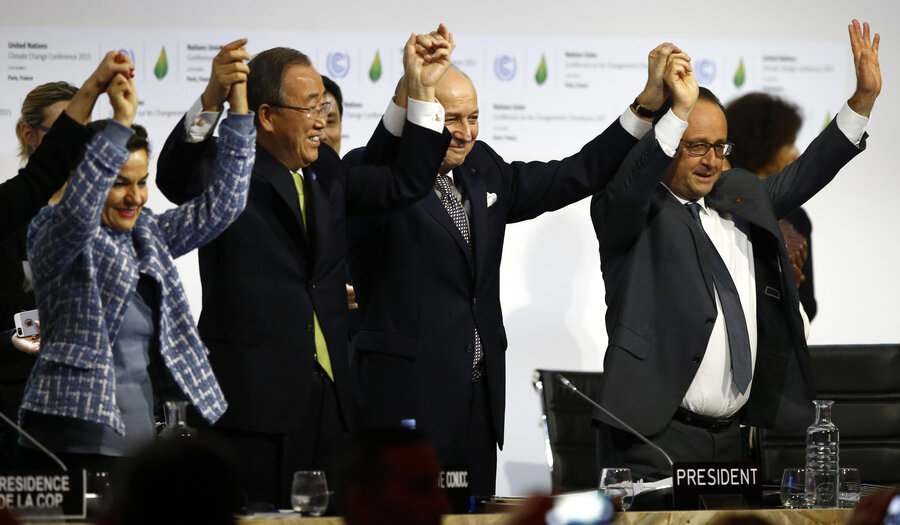
There is agreement! All that we have been waiting and anticipating has come true. Today at about 10:30 Central Time we received word that there has been an agreement at the conference.


This means big news and changes for our world in the next few years! Not only will we start to make changes towards reducing our carbon emission but we also will be working towards keeping our world below 2oC and if possible, 1.5oC.

In the geo-engineering sector this could mean the beginning of more funding, research and discoveries. With the need for better ways to manage our carbon output (and now intake from new carbon reducing technology), the geo-engineering field will flourish.


New technology will likely be developed to take carbon out of the atmosphere. There also will be a push for finding a way to store of use the captured carbon so industries such as plastics or machining would flourish from being able to use this carbon.


There will also be a push monitor the amount of carbon we are taking out of our atmospheres. Even though it is harmful in the levels that we are putting into the atmosphere now, carbon dioxide is essential for things like plants on our planet. If we take too much out me might detrimentally effect plant life.


Carbon dioxide emissions are also what has kept us in the period that humans have developed in (the Holocene). By burning wood and fossil fuels in the early days of humans we essentially inadvertently geo-engineered our climate to become more stable and warm enough for life to develop. If we do not monitor how much carbon we take out we could send ourselves into the next ice age by taking out too much.

Week Thirteen - Policy Briefing


The first images of space. This was probably the beginning of what we now think of as a globally minded world. Before this many people would only think of the world as that consisting of their little spot or “bubble” in the world.


These images allowed us to capture just a glimpse of how small and insignificant our own little “bubble” and world for that matter, is in the grand scheme of things. This has led to many global minded decisions and actions ever since and climate change is no exception to this.


Climate Change by definition should be thought of as a global issue and thus be dealt with as such. Through discoveries in atmospheric and meteorological studies were are able to somewhat understand how events in one part of the world can effect another. Large amounts of carbon released in one part of the world can cause poor air quality and weird weather pattern in another.


Because of this fact we need to think of and combat climate change in the same type of manner. It is not enough for just one part of the world to cut their carbon emissions and go green. It needs to be a fully collaborative effort from all party sides. If not we will only end up combating the problem halfway.


Just like how those first pictures of our planet from space started a movement for us to become more globally minded, we now need to use this new agreement made in Paris to unite as a global force.

Week Twelve - Climate Policy and Politics


Once the draft passes this December in Paris, we are going to be faced with a few more problems than many might realize. Sure it may seem simple to put a tax on carbon or say the big industrialized countries need to clean up the damage from carbon they have already done but, that leaves an interesting question when it comes to the issue of developing countries.

Developing countries are rising the standard of living for the people of their country. Do developed countries have the right to tell them that they do not have the right to develop and raise the standard of living in their country because it would pollute the world too much? I would like to believe that many would answer this question by saying that they do have the right to develop.


This is a big question facing policy makers when designing a draft for combating climate change. How can developing countries be allowed to develop without harming the environment even more than we have already?


I believe the answer comes from the new technology that has been developed by developed nations. By implementing the new technology from these countries into developing countries as they develop, we will be able to reduce the amount of carbon needed for them to industrialize.


This plan also calls for developed nations to drastically take charge of their carbon emissions and utilize the technology that they have. If both developed and developing countries work together in this plan they will be able to reduce the amount of carbon needed to raise the standard of living in developing countries while also implementing new green practices into both the developed and developing countries.

Week Eleven - Technological Solutions


Once a deal is passed the December in Paris is when the real work begins. Signing an agreement is only the beginning of our long road to climate recovery though. The next step to cleaning up our carbon mess will come in the form of geo-engineering.


Geo-engineering involves processes of manually fiddling with the knobs of the earth climate by means of reversing the warming we are seeing from too many greenhouse gases (GHGs) in our atmosphere or by physically taking carbon out of the atmosphere and storing it (the picture above is of an artificial tree that is being developed to capture and store carbon). Both of these approaches have proven controversial due to the effects seen in computer models that simulate what the world would be like if we implemented them. I would like to argue though that though the effects from geo-engineering might be devastating for some, geo-engineering should still be researched and used alongside GHG emission strategies in order for us to be able to stay below the crucial 2oC benchmark set back in 2010.


At the current rate that we are putting carbon into our atmosphere, it is going to take us awhile to ween ourselves off of fossil fuels. In that time I believe that we should use geo-engineering as a way to take the carbon we are still putting into our atmosphere out. By doing so we will start to come closer and closer to becoming carbon neutral and eventually when we do ween ourselves off of fossil fuels we will already have the technology to take carbon out of the atmosphere and return to pre-industrial levels.


Though geo-engineering opposition states that this type of engineering could become out of control because we are messing with forces that humans only have a vague understanding about, I still believe that research into this area should still be allowed. With advancement in computer and technological systems coming to a point where we can model situations before we implement them, geo-engineering will become less and less of a mystery. The effects of a geo-engineering method could be understood before any such process is started and with new research comes new findings as well. We could very well find out more things than we ever imagined about our atmosphere and planet if we allow research in this area to continue. That is how science works. I mean where would be today if research into the mystery of electromagnetic waves was not allowed to be conducted? I know for a fact you wouldn’t be reading this in the same way you are now if that was the case.

Week Ten - Sociopolitical Solutions


A big problem when trying to have your voice heard in any political situation from a standpoint is when it comes to scale. In the area of climate science that scale comes in the form of time and is generally very long. This presents issues when trying to cross the science/policy barrier. On one hand having a long outlook of data may be good for looking at what will happen we continue on certain paths but that presents problems in and of itself as well. Most policy does not work on the same timescales as science and upon seeing such a long outlook of time, many policy makers might think that they have until then to fix the problem so they might put it off.


This is not the right idea. When it comes to climate change we need to use these long scale outlooks but we should interpret them for policy makers so that they are to better understand them.


One thing our current trajectory of carbon consumption does not have is time. If we allow our policy makers to have a false sense of time we will end up being too late to save the planet that we hold so dear.

Week Nine - Climate Strategy at CSB/SJU


When it comes to combating climate change on a smaller scale there is no better place to implement good practices in young people (aka the future leaders of our planet) than in college. This is the time in people’s lives where they are learning the type of person they are going to be in the world and also the habits they are going to use in it. By implementing good climate practices into the everyday lives of college students we will create a generation that will practice and instill these values to perhaps the next generation and so on and so forth. We will start a movement to care and have a sense of responsibility towards our planet.


Here on the St. Ben’s/St. John’s campus we are starting to see these practices already. From things such as recycling in every dorm and apartment to alternative forms of energy used to power our campus, we are starting to make that shift. There are a few other things such as composting at the St. John’s campus and solar panels at the St. Bens campus that still need to be implemented but we are making great strides towards achieving things like this and many more.

With a new agreement coming out in Paris we might be able to see more changes start to come to campus. When the deal in Paris passes in December we might see a greater push on campuses to become carbon neutral at a much faster pace than they already are on.


As stated before I believe that these steps are what is going to be necessary to achieve a happy and healthier climate. By instilling good practices in our young people we are teaching the next leaders of our world how to care for and have a better sense of responsibility towards caring for the earth.

Friday, December 11, 2015

COP21 Day Onze


Yes! Yes! Yes!!! We are coming close to an agreement! A good friend of mine just posted an article on Facebook talking about how close we are coming to an agreement. This agreement though might come after going into overtime at the conference.

This could mean big changes for life as we know it on earth! We now will start to reduce our carbon emissions that will not only help our environment but also our health! We now will start to transition towards new forms of renewable energy.

The past few drafts had a lot of discrepancy over how many degrees to keep the global temperature from rising. Discrepancy was mainly over 2oC or 1.5oC. This new agreement sought a combination between the two and agreed to keep temps below 2oC but aim for 1.5oC or below. This is huge for small island states that will be greatly impacted with a 2oC warming as it will most likely start to still put them underwater and out of a home.

Though 1.5 would still be detrimental for small island states it is our best bet in trying to save most nations. As I said in my earlier post, science is still unclear on how fast the glaciers and ice will melt but still over the timescale of a few centuries all outlooks are not good if we do not change our ways now.


We are so close to being able to combat the dramatic changes that we have created here on earth. Though this may seem like one final push, this is just the start of a climate revolution!