Saturday, December 12, 2015

COP21 Day Douze


There is agreement! All that we have been waiting and anticipating has come true. Today at about 10:30 Central Time we received word that there has been an agreement at the conference.


This means big news and changes for our world in the next few years! Not only will we start to make changes towards reducing our carbon emission but we also will be working towards keeping our world below 2oC and if possible, 1.5oC.

In the geo-engineering sector this could mean the beginning of more funding, research and discoveries. With the need for better ways to manage our carbon output (and now intake from new carbon reducing technology), the geo-engineering field will flourish.


New technology will likely be developed to take carbon out of the atmosphere. There also will be a push for finding a way to store of use the captured carbon so industries such as plastics or machining would flourish from being able to use this carbon.


There will also be a push monitor the amount of carbon we are taking out of our atmospheres. Even though it is harmful in the levels that we are putting into the atmosphere now, carbon dioxide is essential for things like plants on our planet. If we take too much out me might detrimentally effect plant life.


Carbon dioxide emissions are also what has kept us in the period that humans have developed in (the Holocene). By burning wood and fossil fuels in the early days of humans we essentially inadvertently geo-engineered our climate to become more stable and warm enough for life to develop. If we do not monitor how much carbon we take out we could send ourselves into the next ice age by taking out too much.

Week Thirteen - Policy Briefing


The first images of space. This was probably the beginning of what we now think of as a globally minded world. Before this many people would only think of the world as that consisting of their little spot or “bubble” in the world.


These images allowed us to capture just a glimpse of how small and insignificant our own little “bubble” and world for that matter, is in the grand scheme of things. This has led to many global minded decisions and actions ever since and climate change is no exception to this.


Climate Change by definition should be thought of as a global issue and thus be dealt with as such. Through discoveries in atmospheric and meteorological studies were are able to somewhat understand how events in one part of the world can effect another. Large amounts of carbon released in one part of the world can cause poor air quality and weird weather pattern in another.


Because of this fact we need to think of and combat climate change in the same type of manner. It is not enough for just one part of the world to cut their carbon emissions and go green. It needs to be a fully collaborative effort from all party sides. If not we will only end up combating the problem halfway.


Just like how those first pictures of our planet from space started a movement for us to become more globally minded, we now need to use this new agreement made in Paris to unite as a global force.

Week Twelve - Climate Policy and Politics


Once the draft passes this December in Paris, we are going to be faced with a few more problems than many might realize. Sure it may seem simple to put a tax on carbon or say the big industrialized countries need to clean up the damage from carbon they have already done but, that leaves an interesting question when it comes to the issue of developing countries.

Developing countries are rising the standard of living for the people of their country. Do developed countries have the right to tell them that they do not have the right to develop and raise the standard of living in their country because it would pollute the world too much? I would like to believe that many would answer this question by saying that they do have the right to develop.


This is a big question facing policy makers when designing a draft for combating climate change. How can developing countries be allowed to develop without harming the environment even more than we have already?


I believe the answer comes from the new technology that has been developed by developed nations. By implementing the new technology from these countries into developing countries as they develop, we will be able to reduce the amount of carbon needed for them to industrialize.


This plan also calls for developed nations to drastically take charge of their carbon emissions and utilize the technology that they have. If both developed and developing countries work together in this plan they will be able to reduce the amount of carbon needed to raise the standard of living in developing countries while also implementing new green practices into both the developed and developing countries.

Week Eleven - Technological Solutions


Once a deal is passed the December in Paris is when the real work begins. Signing an agreement is only the beginning of our long road to climate recovery though. The next step to cleaning up our carbon mess will come in the form of geo-engineering.


Geo-engineering involves processes of manually fiddling with the knobs of the earth climate by means of reversing the warming we are seeing from too many greenhouse gases (GHGs) in our atmosphere or by physically taking carbon out of the atmosphere and storing it (the picture above is of an artificial tree that is being developed to capture and store carbon). Both of these approaches have proven controversial due to the effects seen in computer models that simulate what the world would be like if we implemented them. I would like to argue though that though the effects from geo-engineering might be devastating for some, geo-engineering should still be researched and used alongside GHG emission strategies in order for us to be able to stay below the crucial 2oC benchmark set back in 2010.


At the current rate that we are putting carbon into our atmosphere, it is going to take us awhile to ween ourselves off of fossil fuels. In that time I believe that we should use geo-engineering as a way to take the carbon we are still putting into our atmosphere out. By doing so we will start to come closer and closer to becoming carbon neutral and eventually when we do ween ourselves off of fossil fuels we will already have the technology to take carbon out of the atmosphere and return to pre-industrial levels.


Though geo-engineering opposition states that this type of engineering could become out of control because we are messing with forces that humans only have a vague understanding about, I still believe that research into this area should still be allowed. With advancement in computer and technological systems coming to a point where we can model situations before we implement them, geo-engineering will become less and less of a mystery. The effects of a geo-engineering method could be understood before any such process is started and with new research comes new findings as well. We could very well find out more things than we ever imagined about our atmosphere and planet if we allow research in this area to continue. That is how science works. I mean where would be today if research into the mystery of electromagnetic waves was not allowed to be conducted? I know for a fact you wouldn’t be reading this in the same way you are now if that was the case.

Week Ten - Sociopolitical Solutions


A big problem when trying to have your voice heard in any political situation from a standpoint is when it comes to scale. In the area of climate science that scale comes in the form of time and is generally very long. This presents issues when trying to cross the science/policy barrier. On one hand having a long outlook of data may be good for looking at what will happen we continue on certain paths but that presents problems in and of itself as well. Most policy does not work on the same timescales as science and upon seeing such a long outlook of time, many policy makers might think that they have until then to fix the problem so they might put it off.


This is not the right idea. When it comes to climate change we need to use these long scale outlooks but we should interpret them for policy makers so that they are to better understand them.


One thing our current trajectory of carbon consumption does not have is time. If we allow our policy makers to have a false sense of time we will end up being too late to save the planet that we hold so dear.

Week Nine - Climate Strategy at CSB/SJU


When it comes to combating climate change on a smaller scale there is no better place to implement good practices in young people (aka the future leaders of our planet) than in college. This is the time in people’s lives where they are learning the type of person they are going to be in the world and also the habits they are going to use in it. By implementing good climate practices into the everyday lives of college students we will create a generation that will practice and instill these values to perhaps the next generation and so on and so forth. We will start a movement to care and have a sense of responsibility towards our planet.


Here on the St. Ben’s/St. John’s campus we are starting to see these practices already. From things such as recycling in every dorm and apartment to alternative forms of energy used to power our campus, we are starting to make that shift. There are a few other things such as composting at the St. John’s campus and solar panels at the St. Bens campus that still need to be implemented but we are making great strides towards achieving things like this and many more.

With a new agreement coming out in Paris we might be able to see more changes start to come to campus. When the deal in Paris passes in December we might see a greater push on campuses to become carbon neutral at a much faster pace than they already are on.


As stated before I believe that these steps are what is going to be necessary to achieve a happy and healthier climate. By instilling good practices in our young people we are teaching the next leaders of our world how to care for and have a better sense of responsibility towards caring for the earth.

Friday, December 11, 2015

COP21 Day Onze


Yes! Yes! Yes!!! We are coming close to an agreement! A good friend of mine just posted an article on Facebook talking about how close we are coming to an agreement. This agreement though might come after going into overtime at the conference.

This could mean big changes for life as we know it on earth! We now will start to reduce our carbon emissions that will not only help our environment but also our health! We now will start to transition towards new forms of renewable energy.

The past few drafts had a lot of discrepancy over how many degrees to keep the global temperature from rising. Discrepancy was mainly over 2oC or 1.5oC. This new agreement sought a combination between the two and agreed to keep temps below 2oC but aim for 1.5oC or below. This is huge for small island states that will be greatly impacted with a 2oC warming as it will most likely start to still put them underwater and out of a home.

Though 1.5 would still be detrimental for small island states it is our best bet in trying to save most nations. As I said in my earlier post, science is still unclear on how fast the glaciers and ice will melt but still over the timescale of a few centuries all outlooks are not good if we do not change our ways now.


We are so close to being able to combat the dramatic changes that we have created here on earth. Though this may seem like one final push, this is just the start of a climate revolution!

COP21 Day Dix


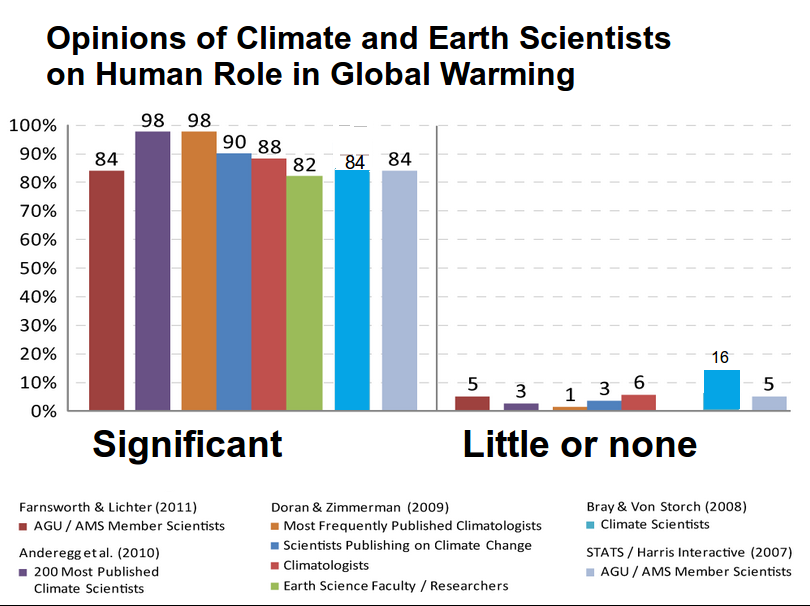
Recently there has been much debate between skeptics and believers of climate change about the science behind what is happening to our climate. A fact I would like to point out to most skeptics is that the “not all scientists agree on climate change” argument will not work anymore. Climate change is happening and most if not ALL scientists agree that it is. If you would look more into your argument before you speak you would realize that what they are disagreeing about is the specifics of climate change. Just because you disagree on the specifics of something though does not mean that you can discredit the overall theme.

I recently came across this article on a favorite website of mine called “I F***ing Love Science” that talked about the disagreement among scientists over this issue. In the article it talked about many of specifics that scientists are trying to come to a consensus on. A few of these issues include cloud cover, ocean absorption, and even how much of climate change are we responsible for! All of these uncertainties among scientists are about specific things like how much of a feedback clouds actually play and how fast sea level will rise. These quantities are over numbers and specifics, not over the overall idea. Science agree that these things will happen if we continue on our current path of carbon emission and the fact the even science is stumped as the specifics of the effects should worry us.


Here is a link to this fantastic article so you can read up for yourself!

Sunday, December 6, 2015

COP21 Day Six

Well a little update for those of you not able to follow the news coming out of Paris, we have a draft! Yes I said it, we have a draft! I was able to sit in on some debate over the wording of this current draft and mostly it sounds like they are just nitpicking over the wording of certain phrases such as naming the draft an agreement when it is not an agreement yet and so on. I highly believe that this is a good sign that we will have an agreement at the end of this week. If pretty much all of debate is not focused on the big issues that means that they agree that something is happening and has to be done!

On another side note I was able to sit in on a side event on smart and resilient cities on Thursday. This talk was great and very well organized. It started by looking at how to “greenify” cities on a large scale and then worked down towards a smaller scale.

First up was looking at how to make the power grid in America more efficient. To quote the main speaker on this issue “If Thomas Edison were to come back and look at our electrical grid now there is not much that he would not recognize from our current electrical system.” This is quite scary when you think about how far we have come in the technology department. The solution that they are suggesting would be to start to convert our huge interconnected grids into smaller microgrids. This technology is already present in things such as hospitals and also in other countries.


This provides advantages in that it allows for the monitoring and adjustment of energy demands that fluctuate throughout the day. This would allow us to lessen the amount of power output from a source on an almost second by second basis! We would also have the ability to fix our grids better in the event of disasters. If one part of a city becomes flooded, power will not necessarily go out for the rest of the city if they were on a different microgrid.


I think this technology holds great potential but the problem with this (and other progressive plans) is that they cost a large amount of money upfront. I want to argue though that the savings from switching to these smart grids will far outweigh the initial cost. Smart grids will save money by making repairs and energy outages more localized. They will not affect businesses and homes as much because power will be localized. It will also allow us to deal with power fluctuations and provide the ability to be able to adjust accordingly. If these were implemented we also would be able to switch to other forms of energy easier because we would be able to do it on a grid by grid basis

Friday, December 4, 2015

Week Six - Future Climates

One thing that is really going to help us to combat climate change in the next coming years is the use of computer models. I’m not talking about how technology will basically run our lives in the coming future but about how computer models can be used to help us to be able to look at what a possible future might look like given a certain set of variables.

Current technology has the capability to take complex systems and solve them faster than humans are currently able to. They also are able to take these complex systems and apply them to more complex systems much like that consisting of our climate. The thought behind computer models is to be able to take this technology and apply it to our current climate situation to find out what path we are on.
This technique is used a lot by people in civil engineering and climate science. Since it would not be advisable to implement geo-engineering techniques without knowing the effects it would have, computer models offer us an opportunity to be able to see what would happen to our earth is we used such techniques.

Many computer models have not shown positive results when it comes to either our current climate trajectory or implemented geo-engineering techniques. Many have shown catastrophic effects for distinct parts of the world through such things as localized drought and floods.


Overall computer models are the closest thing to a futurist prediction of earth’s climate as we are going to get. I believe that computer models should continue to be used for previews of implementation of certain climate actions even if the results they show are not something positive. By using them we are able to save our planet from more catastrophic anthropogenic effects. 

Week Five - Denial, Skepticism, and Contrarianism

One thing this week that I, like many others, had not considered before was the thought that people of other religions (some even very similar to your own) might be in climate denial for different reasons often relating to their religious preferences. Last week I had talked about how religion should be a basis in which care for God’s creation but this week I have read an article that takes a different approach to how religion views climate change.

This week in particular focused on evangelical Christians. Though many would assume that Christians in general would acknowledge climate change as something that we have caused on God’s good earth and need to try to fix, as it turns out, some evangelical Christians have interpreted climate change in a different way. Some view climate change as the start of the apocalypse or pose to ask the question “If God is all good, why would He allow something so bad to happen? Climate change must therefore be something good.”.

As far as the apocalypse goes, there are not very many arguments that can be made against evangelical’s point. At the end of the New Testament it is said that the world will end in a series of natural disasters such as famine, disease, drought, and floods after the covenant with the antichrist is broken. This is certainly in accordance with what we are seeing in the world today due to the effects of climate change. The conflict comes though when you bring up the point I had said last week. God made us to be stewards of his good earth. We can clearly see that by burning fossil fuels, we are not helping or caring for our earth but rather making it quite ill. If we are clearly not taking care of our earth than isn’t it our own actions that are making our earth this way and not the antichrist?


To address the other point of why climate change would be bad if nothing God made can be bad, I would like to bring up a very common example of something God made that went totally sour, Lucifer. Lucifer was God’s own right had angel and he ended up to be a bad apple and even turned away from his creator! If that doesn’t show how not all of God’s creations can be something good I don’t know what does. It goes to show just how mysterious God can be. He can create things that we would not necessarily be considered good but they all serve a purpose in the end that can end up for the greater good.

COP21 Day Quatre


One of the most substantial resources we have here on earth is water. It comes in 2 basic forms and is what many scientists agree to be key to finding other life in the universe. Water is what sustains us but it won’t if we don’t learn to take care of it. Currently by emitting CO2 we are contributing to the deterioration of our water here on earth, mainly in our world’s oceans.

When CO2 in emitted into the atmosphere, 90% of it will be absorbed by the ocean. This is a problem because most of the carbon that was emitted was taken from the land before being sent into the atmosphere, not the ocean. By having this land CO2 being absorbed by the ocean, we are creating a surplus of carbon in our oceans. This leads to ocean acidification and the death of many species due to large amounts of carbon that can in a sense “crowd out” the oxygen that is vital form them to flourish underwater.
Another way our oceans are being affected is by sea level raising. I was able to sit in on a talk yesterday that emphasized how it will not just be the melting of our world’s largest store of fresh water (glaciers) that will cause waters to rise but also the sheer law of physics that things that are warm, expand (also known as thermal expansion).

Water has a very distinct property called latent heat. This is what causes the water in your glass with ice, to stay a constant temperature until all of the ice is melted. To put it basically water is very resistant to changes in temperature. This means that once our oceans start to warm, even though it will take a longer time than the land surrounding it, it also means that once temperatures start to decrease, the oceans will stay warmer for longer than the land.

SO what does this mean for us exactly? Well it could mean that even though we might start to combat the changes seen from our CO2 emissions and bring the temperature down, the effects of the damage we have already done will continue to be seen for a number of years after the fact. If we are going to act on climate change we are going to have to act now. The changes seen in our oceans will be very detrimental to all life on our planet due to the fact that life exists because of this essential resource. If we act now we might still have a chance to save life from having to experience these changes and hopefully before we go through years of unwanted side effects 

Tuesday, December 1, 2015

COP21 Day Deux


"We cannot manage what we cannot control". That is the theme when it comes to technology and our climate. This is the problem that scientists are trying to combat then they look for ways to monitor carbon fluctuation around the world.


Fluctuation are observed through means of satellite. Images or spectral analysis is done on the atmosphere as a satellite rotates around the earth at about 7 m/s. At this speed it takes a satellite about 8 days to orbit around the earth (from pole to pole) and collect data about CO2 concentrations.


There is a new push to have satellites that are geo-synchronous (stay directly above one part of the earth). This push comes from the fact that if we have satellites at this position, we would be able to in a sense "stare" at a certain sector of the earth and collect data from it continuously.

This new type of geo-synchronous satellite is actually very plausible. We currently have satellites that orbit the earth in this way that provide us with cellular coverage. A new one is launched every few months and half of the vessel is essentially empty. If we could use that space and fill it with the equipment that could monitor CO2 concentrations in our atmosphere we would not only be able to have data to monitor our CO2 contributions but also a way to manage them by holding countries accountable for the amount of CO2 they are putting into the atmosphere.

Wednesday, November 18, 2015

Week Eight - Science Advice to Policy

One of the greatest challenges facing global climate change happens at the science/policy interface. It is at this point where the key research and findings from climate scientists are twisted and interpreted into policy. Most of the miscommunication happens here and it can really seen between policy makers and scientists.

When scientists work is interpreted at this interface, much of their work's relevance is lost in translation. A good example of this would be when it comes to matters of certainty. In the science world, the number of things that can be thought of as absolutely certain are extremely minimal. Scientists are taught to be skeptic, even of their own work. This means that even if a scientist and his or her peers observe something to be true 100% of the time, they will still question if what they are seeing happen, will still happen every single time. This thought process goes on over and over again until either it is concluded that what was observed happens every single time, in which case it will go on to be known as a theory and tested even more to see if it is true under other circumstances. If it is found to not be true, more research will go into findings out what is causing this variability and more findings will be found and tested in the same manner as described above.

This example can be a major player for some of our big carbon emitters in the world. They see this uncertainty in scientists work as a way to attack climate change. To them, if something is not 100% certain than it cannot be true. This is the message they send to the general public to ensue doubt about our scientists.

This interface between communication is one of the biggest hurdles that, if we overcame it, could allow us to take serious steps towards combating climate change. If we could figure out how to get the message that researchers are trying to convey, over to policy makers in a language that they understand, great strides towards a climate policy would be able to take root and make it into our world.

Week Four - Climate Theology

When it comes to Catholic theology, there is one core teaching that has fallen to the background which, in light of human events, needs to be brought to the foreground. It is that of stewardship of the earth. As Catholics we are taught to be stewards of the earth. The earth was created to sustain us and for us to statin and care for it. Most Catholics nowadays though have fallen into the thought pattern of “What can the earth do for me?”. This is only half of what we are taught as Catholics. Yes the earth is meant to be able to sustain us but in return we are supposed to care for it. If we keep taking from it without putting something back, we will end up with nothing left to take from. Where will we be then?

This is the path that we currently are on. We are taking from the resources of our earth without considering the consequences of what we are taking. By taking fossil fuels and burning them we are taking away from the natural cycle of the earth. We are obscuring what God had created the earth to do naturally and that is to heat and cool itself in general cycles.

Our actions can be seen in those less fortunate as well. We are called to care for our fellow brother and sisters less fortunate than us. Those less fortunate than us do not always have the resources or means necessary to combat the changes we are making in our earth. An example would be rise in sea level. Those in developing countries that are at sea level do not necessarily have the means necessary yet to build higher sea walls or relocate their developing cities due to rising flood waters. Yes they too are contributing to sea level rise but who are we to deny them the right to develop and rise their standard of living. It is up to us to help them raise their standards of living as well as using our new technology that we have to lessen its effect on our climate and environment.


It is up to us to combat these injustices seen in our world. We have the power to care for our earth and help those most in need. We can give back to the earth and care for her in the way God intended. We can develop new technology for developing countries to help stop the emission of carbon into our atmosphere. And, we can help those that are most in need while still being able to care for and protect our earth. 

Week Two - Climate Culture/Climate and Society

One of the biggest mistakes that has been made when it comes to climate change is invoking doubt or flat out ignoring the science that has been discovered about it. In my recent reading of Naomi Oreskes’ The collapse of Western Civilization, it is apparent to see what will happen if we ignore the scientific findings of lead researchers, saying that there is just too much uncertainty in their work. The thing that most people don’t understand is that there will always be uncertainty about any scientific work. It is especially true in the case of climate change, not only for the fact that something like this has never before happen in the history of our planet but also for the sheer fact that science is very rarely 100% certain. There will always be doubt in scientific findings. Even things that we generally think of as true have uncertainties about them. Take electricity for example. For the longest time, the space that electricity traveled through was thought to be made up of a substance referred to as ether (not the same as the ether we know today in chemistry). This ether was thought to be the medium that electromagnetic waves traveled through and lead to theories in optics that assumed that since light was an electromagnetic wave as well (EM wave) and that it too must travel though ether when propagating. The space between planets in space was thought to be made of ether but this caused confusion when looking at other theories in physics. It was later shown through the Michelson-Morley experiment that ether does not exist and later on Einstein used this to refute the idea of ether and develop more commonly recognized theories of special relativity.

The point of this example is that for the longest time, the existence of ether was thought to be truth. It was only after some discrepancies were found, that scientists were able to dig deeper find out that this theory wasn’t correct.

Since then we have learned from our mistake of taking most (if not all) scientific finding to be true. We now take them as theories and as something up for discrepancy even if we believe that we know all there is to know about it. Because now we know that there will always be something more to learn about a certain subject.


The same thing can be applied to climate change. We will probably never know all that there is to know about it in our lifetime. All the factors that go into understanding just one piece of what is happening takes perspectives from so many sides (and lots of them aren’t even scientific). If we are going to combat climate change we need to listen to what our lead scientists and researchers have to say. It may not be 100% true but if we can take what we do know now and apply it, we may find that we are able to find out more and more about our climate and then use that to be better able to combat our changing world before it is too late. We have to start now or by the time we are 100% sure of what will happen, we will already be past the point of no return or worse, already be experiencing the dreaded, predicted, end results.

Week One - Why Climate Matters

Hello fellow climate enthusiasts! This blog focuses on issues of climate from a variety of views such as those pertaining to cultural, political, and scientific emphasis. This week I would like to focus on a brief overview of climate change.


Climate change is one of the biggest threats that humanity is going to have to counteract in the upcoming years. The fluctuation of our climate has been due to changes in the environment that we as humans have caused ourselves. By releasing carbon into the atmosphere we have caused an occurrence in our natural cycle that the earth has never seen before. In a time where we are supposed to be headed into another ice age or cold period, we are seeing our global temperatures actually rise. This affects many areas of human existence including those related to economics, science, and culture in general. In order to counteract the effects felt by this change, we need to approach climate change from these angles as well. If were are able to figure out how other cultures view climate and the environment, what processes drive climate change, and how these will affect us economically, we will be able to take action towards climate change in 3 of the major areas that encompass it.

Thursday, November 12, 2015

Resource Guide - Geoengineering

1.      Abdullah, K. (2005). Renewable energy conversion and utilization in ASEAN countries. Energy, 30(2-4), 119-128. doi: 10.1016/j.energy.2004.04.027
This paper addresses geoengineering in developing countries, mainly the ASEAN region. Regions like the ASEAN have a big potential for renewable energy sources that would help to meet their growing energy consumption needs as they are developing. The thought is to get this region to use these new renewable energy sources to help to reduce GHG emissions (talked about in introduction). This article proposes good solutions when it comes to the thought of developing nations.

2.      Keith, D. W. (2000). Geoengineering the climate: History and prospect. Annual Review of Energy and the Environment, 25, 245-284. doi: 10.1146/annurev.energy.25.1.245
This paper talks a geoengineering, mainly where it has come from and where it is headed. Topics covered include “low-mass space-based scattering systems for altering the planetary albedo, simulation of the climate’s response to albedo modification, and new findings on iron fertilization in oceanic ecosystems” (Keith pg. 245 (Abstract)). Geoengineering is also assessed based on “economics, risk, politics, and environmental ethics” (Keith pg. 245 (Abstract)).

3.      Oppenheimer, M. (2005). Defining dangerous anthropogenic interference: The role of science, the limits of science. Risk Analysis, 25(6), 1399-1407. doi: 10.1111/j.1539-6925.2005.00687.x
Through the example of ice sheets, this article aims to approach the question of how should we approach scientific findings. Many of natural science findings are interpreted as from the standpoint of the social sciences. This has both negative and positive effects. Natural sciences are questioned when it comes to longer timescales as well (this issue is addressed in this article as well).

4.      Virgoe, J. (2009). International governance of a possible geoengineering intervention to combat climate change. Climatic Change, 95(1-2), 103-119. doi: 10.1007/s10584-008-9523-9
The governmental issues related to geoengineering are discussed here. (sites Keith article!) This article agrues that geoengineering might become more mainstream if it is seen that mitigation and adaptation procedures are seen to be failing. It also states that further research into how gepengineering effects political, social, and governmental features.(Virgoe, 2009)

5.      The Truthrevealed. (2015, May 12). Geo Engineering Documentary 2015 (This is a must watch). Retrieved November 06, 2015, from https://www.youtube.com/watch?v=RD2lABk16qE
This video talks a lot about the oposition to geoengineering. It makes me want to screa at the person talking when I watched it because I can disprove me many of his “well researched” facts but this will provide a great insight into what to talk about for opposition to geoengineering. (They also have a website www.geoengineeringwatch.org that has many opposing views)
6.      McPherson, Ian. Geoengineering... a good idea? (2012, November 23). Retrieved November 06, 2015, from https://www.youtube.com/watch?v=mW4qNBOZMBg
Learned about this “rough” geoengineering project in Troy Knights Climate Studies class last semester. Shows some of the “not so smart” things that geoengineers have done that have aided the public is not liking this science.

7.      The Agenda with Steve Paikin. Climate IV: What to Do? Geoengineering! (2010, March 08). Retrieved November 06, 2015, from https://www.youtube.com/watch?v=598sdVtSLtA
Another video that goes over the 3 major plans of geoengineering. The first is sinking it to the bottom of the ocean., the second is capturing it from the air, and the third is reflecting solar radiation back into space. All 3 possibilities are examined by top professors and people in this field.

8.      Shukman, D. (2014, November 26). Geo-engineering: Climate fixes 'could harm billions' - BBC News. Retrieved November 08, 2015, from http://www.bbc.com/news/science-environment-30197085
This article by the BBC offers some evidence based reason as to why people are so against geoengineering. When asked about this type of engineering, many scienctists say that more research needs to be done before affirmative action can be taken in this area. It’s just to complicated. Many computer models have suggested that there are a lot more sideeffects to geoengineering than originally thought and that is why more research needs to be done to understand the complex processes that we are messing with.

9.      Submission to Joint Workshop of Experts on Geoengineering. (n.d.). Retrieved November 11, 2015, from https://unfccc.int/files/meetings/ad_hoc_working_groups/lca/application/pdf/bolivian_submission_on_geoingeneering.pdf
This is a copy of Bolivia’s submission to experts on geoengineering explaining why they are not in support of geoengineering. They claim that it focuses on fixing symptoms rather than addressing the cause of the problem. I would like to argue that yes, geoengineering does focus on the symptoms caused by anthropogenic activity but we need to fix that side as well as address the cause.

10.   Patterson, T. (2015, October 27). Will hacking nature protect us from climate change? - CNN.com. Retrieved November 07, 2015, from http://www.cnn.com/2015/10/26/tech/pioneers-carbon-sink-geoengineering-climate-hack/
Awesome CNN story about possibly taking CO2 out of the air and putting it into useful things that we use every day (car, clothes, ect) The process is expensive and limited to how much carbon we can actually take out of the air though. If it were possible though we would go back to pre-industrial CO2 levels by the end of a decade. THIS IS HUGE!!! (Also contains a video for anyone who doesn’t want to read).

11.   Schulman, J. (2015, March 28). This geoengineering scheme could halt climate change -- but it's probably a terrible idea. Retrieved November 11, 2015, from http://grist.org/science/this-geoengineering-scheme-could-halt-climate-change-but-its-probably-a-terrible-idea/
Putting aerosols into the air might seem like an absurd thing to do to combat climate change but it is one of the natural things our planet has been doing since its existence. The eruption of volcanoes is the major contributor to this. Scientists believe that by artificially simulating this we would also be able to cool our planet. The draw back from this are that it can mess with planet’s photosynthesis and cause acid rain. I also would only be ”covering up” the problem of CO2 instead of combating it head on so if we stopped putting aerosols into the atmosphere, global average temp would shoot up. It is a great idea but we need to do more research on the effects it would have on the environment as well.

12.   Marshall, C., & Climatewire. (2014, May 22). Glacial Melt Pours Iron into Ocean, Seeding Algal Blooms. Retrieved November 11, 2015, from http://www.scientificamerican.com/article/glacial-melt-pours-iron-into-ocean-seeding-algal-blooms/

Iron dumping into the ocean can be another great contributor to the reducing global average temp. It requires dumping iron into the ocean to promote algae growth which in turn absorb CO2. This CO2 then goes to the bottom of the ocean once the algae (or organism in the food chain with the algae) dies and sinks to the bottom of the ocean. This article has found a naturally occurring iron feed into the oceans from ice melts in the northern and southern hemispheres (mainly the north). This ice melt feed iron particles into the ocean which promotes the growth of algae. Scientists speculate that these ice melts account for about as much iron in the oceans as do dust particles in the wind (originally thought to be the only major contributor to iron in the ocean). There are many positives to this naturally occurring iron into the ocean including a lot of carbon being sunk to the deep ocean and the positives are thought to far outweigh the negatives, the negatives being that there will essentially be more algae in the ocean.

Sunday, September 20, 2015

Week Three - Past and Present Climates

One of the key elements to combat climate change is understanding what forcing are behind. Many people are aware of the numerous human activities that contribute to climate change but not very many have a grasp on the natural processes that also cause our climate to change. All possible climate change causes need to be taken into account when trying to figure out if the changes we are seeing are natural and if they are not, how to combat them at the source.
Some of the natural processes that have been causing our climate to change over the past 4 and a half billion years have been our distance from the sun (orbital cycle), the suns strength, earths reflectivity (albedo), and greenhouse gas emissions (GHG emissions). Each of these have occurred in constant cycles throughout our history but one in particular, GHG emissions, has been amped up with advances in technology by humans.  We know this by looking at proxies of past climate change that allow us to measure the relative amounts of GHGs in the atmosphere at different time periods.
The reason we can know that none of the other climate change causes are causing our climate to change is because of the time scales that they work on. Orbital cycles occur at very regular intervals. The earth rotates around the sun in an ellipse type path that grows and stretches as times goes on. When it comes to affecting climate change though, these changes happen over a span of thousands of years and are too long to account for the changes we see from them.
Similarly to the changes in our orbit, the sun has also been getting steadily brighter and hotter. This though has been happening since the earth first formed and would not account for the sudden increase that we have seen in average global temperatures in the fast few decades. The sun goes through a sun spot cycle as well but that happens every 11 years.
Earth reflectivity has been changing throughout time as well and controls how much energy from the sun is radiated back out into space. If albedo is high, more energy is reflected back into space, if it low, more energy is absorbed. Many things affect albedo such as particles in the atmosphere, ice sheets on the poles, and the different structures or plants that occupy different land areas. If we have more ice masses and reflective aerosols in the atmosphere, more incoming solar radiation is reflected and the earth cools. But if ice melts and leaves fresh soil exposed or trees are cut down for fields that exposed more dirt, these things can cause our albedo to go down and our temperature to rise. This can also cause a negative feedback because more ice melting causes more soil to be exposed and warmed by incoming radiation. This warmed soil causes more ice to melt and so on and so forth.

Lastly we have GHG emissions. These emissions have steadily been increasing since the existence of humans. Before our time, these gases were emitted by volcanoes and wild fires. Since nothing was able to control these processes we can and say that they occur at somewhat frequent times throughout history. What we can’t ignore though is that there has been an increase in the presence of these gases in the past few decades. The only factor that has differed through their semi-constant occurrences is humans. We have essentially sped up the process of GHG emissions into the atmosphere way beyond something we have ever seen in the past thousands of years.